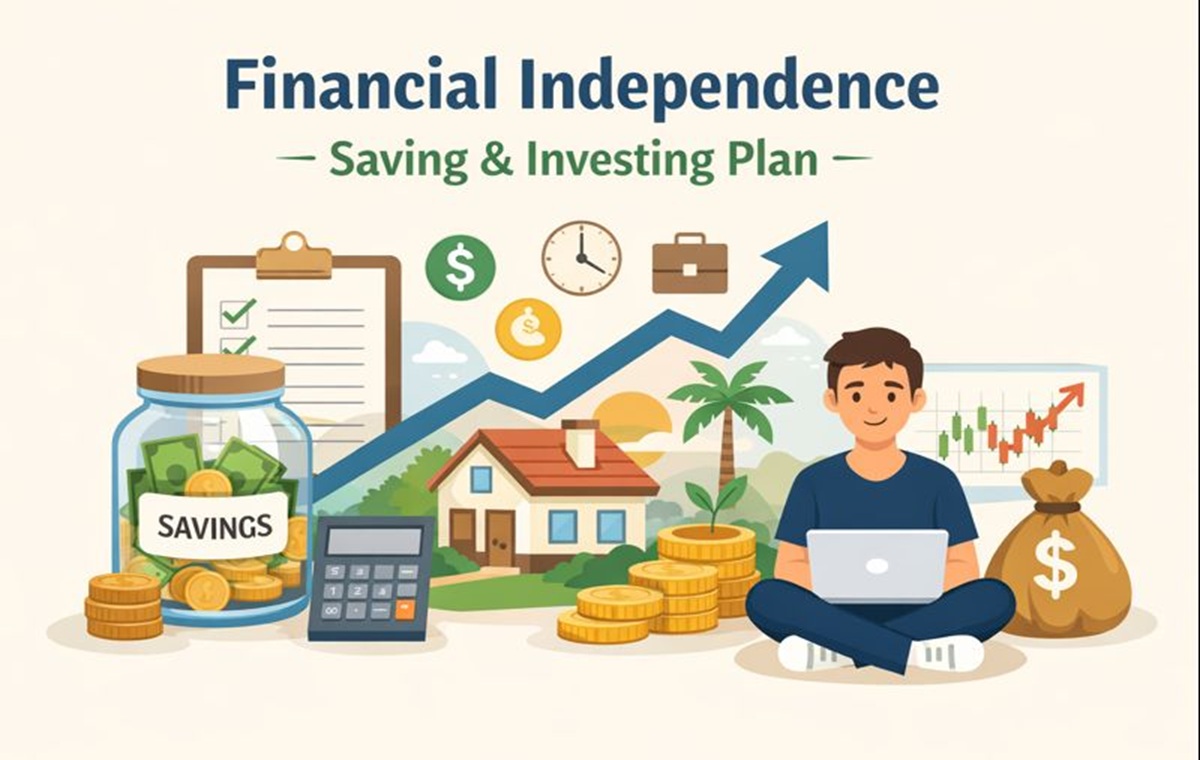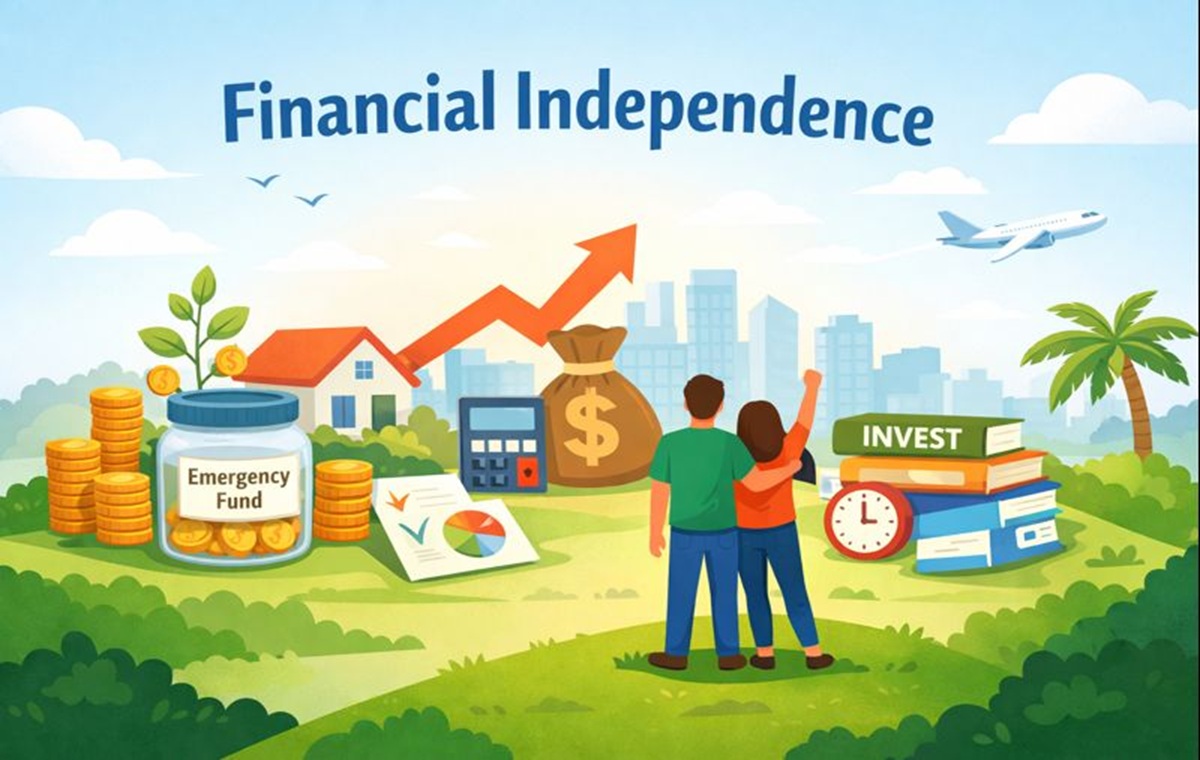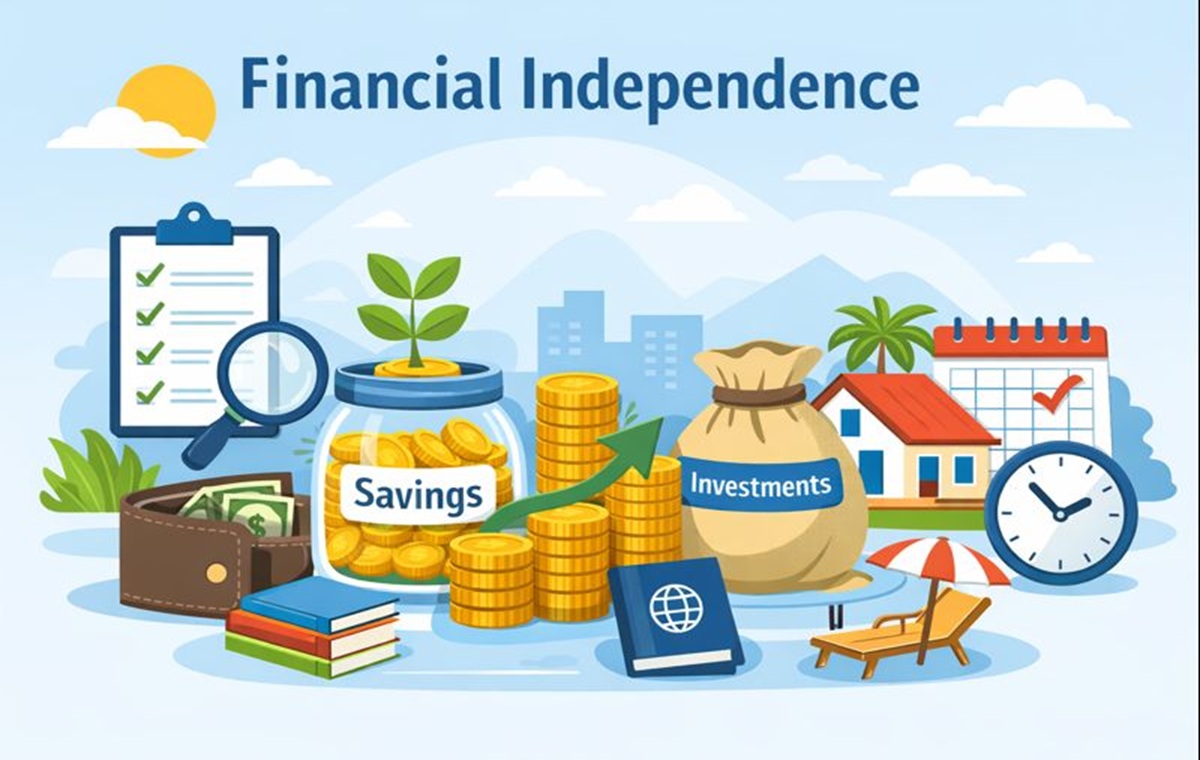
Financial independence is a goal many people dream about. It means having enough money to live your life comfortably without depending on a regular job or monthly salary. When you are financially independent, your money works for you instead of you working only for money.
This article explains financial independence in very simple words. It also shows step by step how anyone can work toward this goal, even with a normal income. There are no shortcuts or risky promises here. Everything is explained clearly and safely.
What Is Financial Independence?
Financial independence means you have enough income from your savings, investments, or other sources to pay for your daily living costs. You do not rely fully on a job, business, or other people for money.
This does not mean you stop working forever. Many financially independent people still work because they enjoy it. The main difference is that they do not work because they must, but because they want to.
Financial independence gives you control over your time, choices, and lifestyle.
Financial Independence vs Being Rich
Many people think financial independence means being very rich. This is not true. Being rich means having a lot of money. Financial independence means having enough money for your needs.
A person with a simple lifestyle can become financially independent with less money. A person with high expenses will need more money to reach the same goal.
So financial independence depends more on expenses and planning, not only income.
Why Financial Independence Is Important
Financial independence brings peace of mind. It reduces money stress and fear about the future. When you are financially independent, you are better prepared for emergencies like job loss, illness, or economic problems.
It also gives freedom. You can spend more time with family, focus on health, learn new skills, or start something meaningful without worrying about monthly bills.
Step 1: Understand Your Income and Expenses
The first step toward financial independence is knowing your money situation clearly.
You should know:
- How much money you earn every month
- How much money you spend
- Where your money goes
List all your expenses, including rent, food, bills, transport, and small daily spending. Many people are surprised when they see how much money they spend without noticing.
This step helps you take control of your finances.
Step 2: Create a Simple Budget
A budget is a plan for your money. It tells your money where to go instead of wondering where it went.
A simple budget includes:
- Needs (rent, food, bills)
- Savings
- Extra spending (entertainment, shopping)
You do not need a complicated system. Even a simple notebook or spreadsheet works. The goal is to make sure you spend less than you earn.
Saving money is not what is left at the end. It should be planned first.
Step 3: Reduce Unnecessary Expenses
Reducing expenses is one of the fastest ways to move toward financial independence.
This does not mean living a hard or unhappy life. It means cutting spending that does not add real value to your life.
Examples include:
- Eating out too often
- Subscriptions you do not use
- Impulse shopping
- High-interest debt
Small savings every month can become big savings over time.
Step 4: Build an Emergency Fund
An emergency fund is money saved for unexpected situations. This includes medical issues, job loss, or urgent repairs.
A good emergency fund usually covers:
- 3 to 6 months of living expenses
This fund protects you from going into debt during difficult times. It also gives confidence and stability.
Keep emergency money in a safe and easy-to-access place.
Step 5: Avoid High-Interest Debt
Debt can slow down your journey to financial independence, especially high-interest debt like credit cards or personal loans.
Try to:
- Pay off high-interest debt as early as possible
- Avoid new unnecessary debt
- Use credit carefully
Not all debt is bad, but uncontrolled debt takes away your freedom and future income.
Step 6: Increase Your Savings Rate
Saving more money is a key part of financial independence.
You can increase savings by:
- Reducing expenses
- Increasing income
- Saving bonuses or extra earnings
Even saving a small amount regularly is powerful. The habit matters more than the amount at the beginning.
Automating savings can help you stay consistent.
Step 7: Start Investing for the Long Term
Saving alone is not enough for long-term financial independence. Investing helps your money grow over time.
Investing means putting money into assets that can increase in value or provide income. Examples include:
- Stocks
- Mutual funds
- Retirement plans
- Real estate
Long-term investing is about patience, discipline, and learning. It is not about quick profits or risky decisions.
Always invest according to your knowledge and risk comfort.
Step 8: Focus on Long-Term Goals
Financial independence takes time. It is not achieved in a few months.
Set clear long-term goals such as:
- Saving a certain amount
- Reaching a specific monthly investment level
- Becoming debt-free
Review your progress regularly and adjust when needed. Slow progress is still progress.
Step 9: Increase Your Income When Possible
While controlling expenses is important, increasing income can speed up your journey.
Ways to increase income include:
- Learning new skills
- Asking for promotions
- Starting a side income
- Freelancing or online work
Extra income should not always increase spending. Using it for savings and investments helps build independence faster.
Step 10: Maintain a Simple and Balanced Lifestyle
Lifestyle plays a big role in financial independence.
If your expenses grow every time your income grows, independence becomes harder. This is called lifestyle inflation.
A balanced lifestyle focuses on:
- Needs over wants
- Experiences over things
- Value over luxury
You do not need to give up happiness. You just need to choose wisely.
Common Mistakes to Avoid
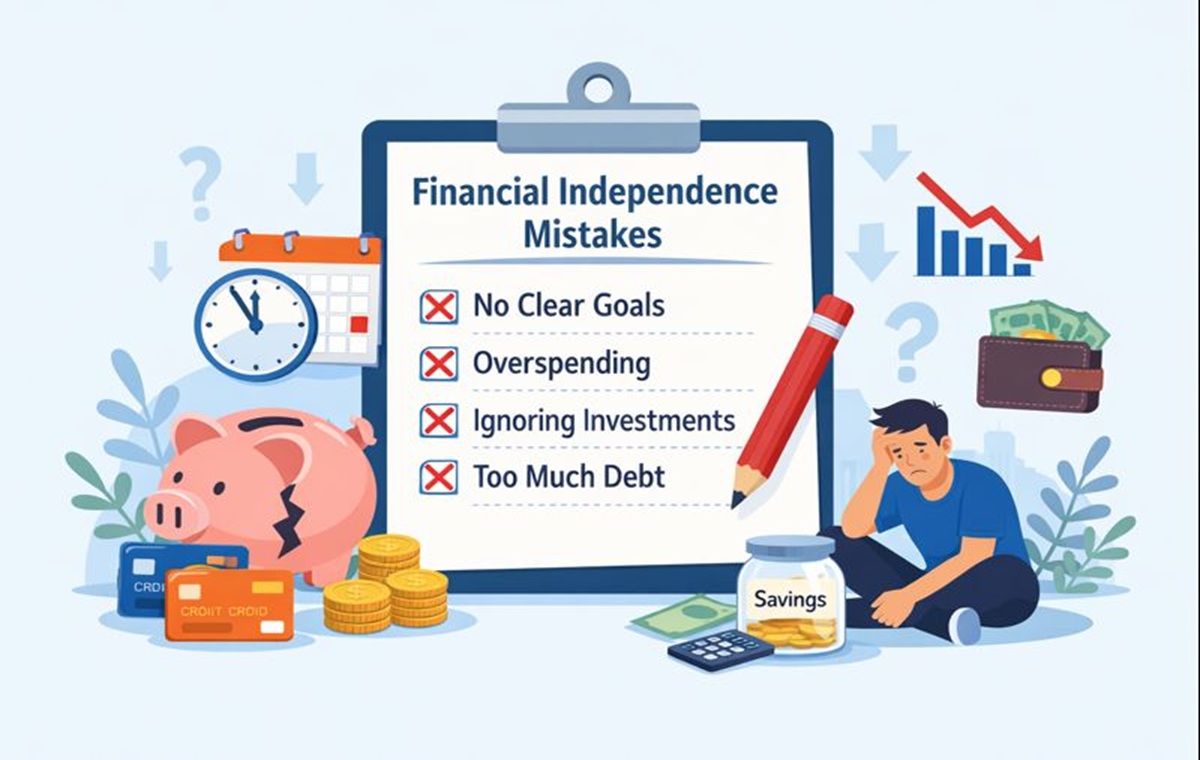
Many people delay financial independence by making common mistakes, such as:
- Not tracking expenses
- Depending only on income increases
- Ignoring savings
- Chasing quick investment gains
- Giving up too early
Avoiding these mistakes helps you stay on the right path.
Financial Independence Is Different for Everyone
There is no single formula for financial independence. Your age, income, family size, and lifestyle all matter.
Some people aim for early financial independence. Others aim for partial independence, where they work less but live comfortably.
The most important thing is to create a plan that fits your life.
How Long Does It Take to Become Financially Independent?
The time needed depends on:
- Income
- Savings rate
- Expenses
- Investment returns
For some people, it may take 10 to 20 years. For others, longer. The key is consistency and patience.
Starting early always helps.
Final Thoughts
Financial independence is not about being rich or stopping work. It is about freedom, security, and control over your life.
By understanding your money, spending wisely, saving regularly, and investing carefully, anyone can move closer to financial independence step by step.
The journey may be long, but every small action today creates a better and more secure future.