Financial independence means having enough money to live your life without constant stress about income. It does not mean being extremely rich. It means your savings and investments support your daily needs and future goals. With the right plan, anyone can move toward financial independence, even with a normal salary.
This article explains a simple and practical financial independence plan using saving and investing. The language is easy, the steps are clear, and the ideas are realistic for beginners.
What Is Financial Independence?
Financial independence is a situation where your money works for you. You do not fully depend on your monthly salary to survive. Your savings and investments help pay for your living costs.
When you are financially independent:
- You worry less about job loss
- You can handle emergencies easily
- You have more freedom in life decisions
- You feel mentally relaxed about money
Financial independence is not achieved overnight. It is built slowly through discipline, saving, and smart investing.
Why Saving and Investing Are Important Together
Saving and investing are both important, but they serve different purposes.
Saving
Saving keeps your money safe. It helps you manage emergencies and short-term needs. Savings are usually stored in bank accounts or safe instruments.
Investing
Investing helps your money grow over time. It protects your money from inflation and builds long-term wealth.
A strong financial independence plan uses both saving and investing together.
Step 1: Understand Your Current Financial Situation
Before planning, you must understand where you stand today.
Ask yourself:
- How much do I earn every month?
- How much do I spend?
- How much do I save?
- Do I have any debt?
Write down your income, expenses, debts, and savings. This clarity helps you make better decisions.
Step 2: Set Clear Financial Independence Goals
Goals give direction to your plan. Without goals, saving and investing feel meaningless.
Examples of simple goals:
- Build an emergency fund
- Save for house down payment
- Become debt-free
- Create passive income
- Retire early or comfortably
Make your goals realistic and time-based. Small goals lead to big success.
Step 3: Create a Simple Monthly Budget
A budget tells your money where to go instead of wondering where it went.
Simple Budget Rule
You can use this basic structure:
- Needs: rent, food, utilities
- Savings: emergency fund and future goals
- Investing: long-term growth
Always pay yourself first. Treat saving and investing as mandatory expenses.
Step 4: Build an Emergency Fund First
An emergency fund is the foundation of financial independence.
Why It Is Important
- Protects you during job loss
- Covers medical emergencies
- Prevents debt during crises
How Much to Save
Aim for 3 to 6 months of basic expenses.
Keep this money in a safe and easily accessible account.
Step 5: Reduce and Control Debt
Debt slows down financial independence.
Focus on:
- Paying high-interest debt first
- Avoiding unnecessary loans
- Using credit responsibly
Lower debt means more money for saving and investing.
Step 6: Start Saving Consistently
Consistency matters more than amount.
Smart Saving Habits
- Save a fixed percentage of income
- Increase savings when income increases
- Avoid lifestyle inflation
- Automate savings if possible
Saving builds discipline and security.
Step 7: Learn the Basics of Investing
You do not need to be an expert to invest. Start with basic knowledge.
Important Investing Concepts
- Risk and return
- Diversification
- Long-term growth
- Compound interest
Investing is not gambling. It is a planned approach to wealth growth.
Step 8: Choose Simple and Safe Investment Options
As a beginner, focus on simple and understandable investments.
Examples include:
- Index funds
- Mutual funds
- Retirement accounts
- Long-term savings plans
Choose options that match your risk tolerance and time horizon.
Step 9: Invest for the Long Term
Financial independence requires patience.
Avoid:
- Frequent buying and selling
- Emotional decisions
- Short-term speculation
Long-term investing allows compounding to work in your favor.
Step 10: Increase Income When Possible
Saving and investing become easier with higher income.
Ways to increase income:
- Learn new skills
- Freelancing or side work
- Career growth
- Passive income ideas
Extra income should support savings and investments, not just spending.
Step 11: Review and Adjust Your Plan Regularly
Life changes, and your plan should adapt.
Review your finances:
- Every 6 months or yearly
- After income changes
- After major life events
Adjust savings, investments, and goals as needed.
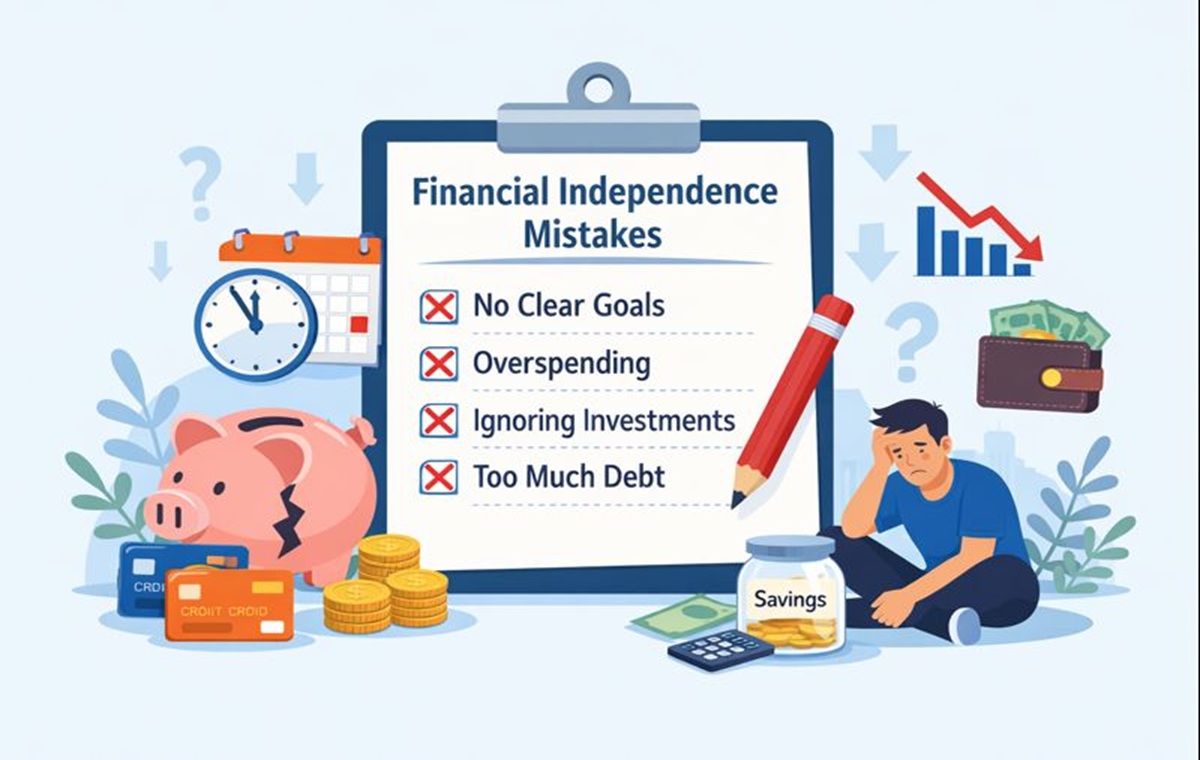
Step 12: Avoid Common Financial Independence Mistakes
Many people delay progress by making simple mistakes.
Avoid:
- Ignoring budgeting
- Relying only on saving
- Chasing quick profits
- Not diversifying investments
- Giving up too early
Consistency beats perfection.
How Long Does Financial Independence Take?
There is no fixed timeline. It depends on:
- Income level
- Savings rate
- Investment returns
- Lifestyle choices
For some, it may take 10 years. For others, 20 or more. What matters is steady progress.
Benefits of a Simple Financial Independence Plan
A simple plan is easier to follow and maintain.
Benefits include:
- Less financial stress
- Better control over money
- Strong future security
- Freedom to make life choices
- Peace of mind
Simplicity increases success.
Final Thoughts
Financial independence is not only for high earners or experts. It is achievable for anyone who saves regularly and invests wisely.
Start small. Stay consistent. Be patient.
A simple financial independence plan using saving and investing can change your life over time. The key is to begin today and stay committed.