The global financial system has worked in almost the same way for many decades. Banks control money transfers. Governments issue currencies. Payments often move slowly and cost high fees. Many people around the world still do not have access to basic banking services.
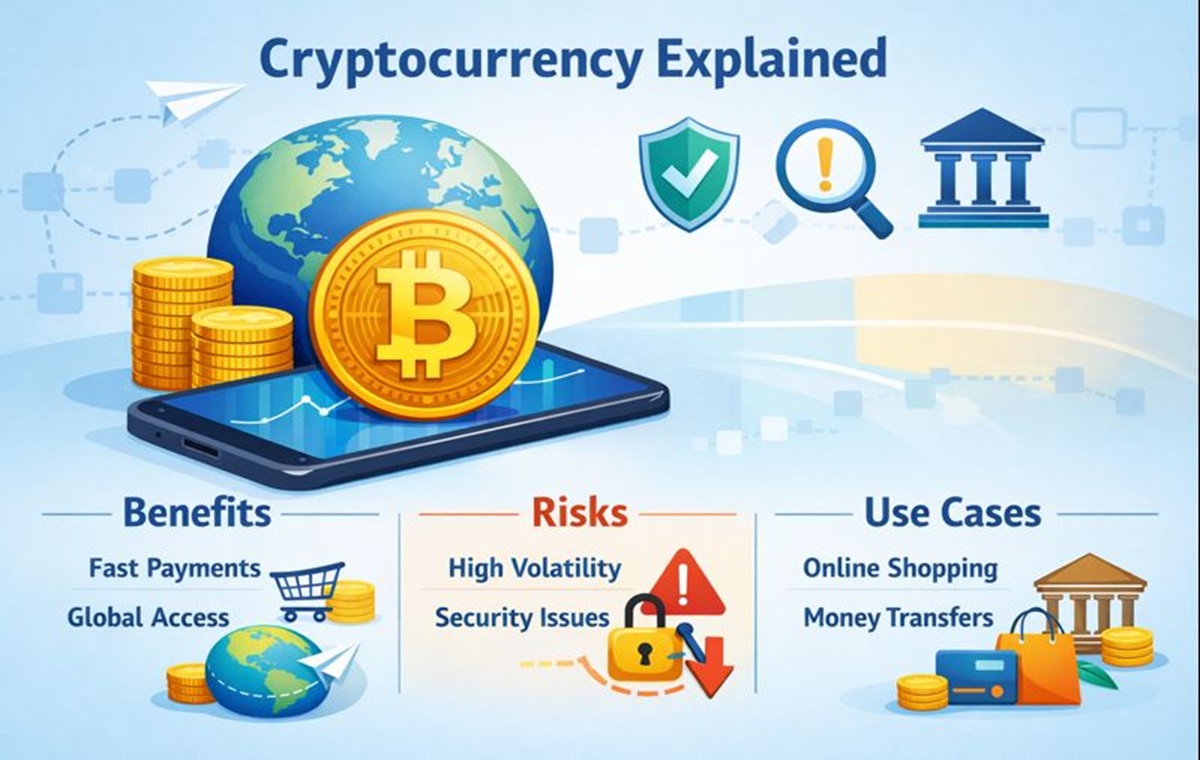
Cryptocurrency is changing this situation. It is introducing new ways to send, store, and manage money. It works without traditional banks. It uses digital technology instead of physical cash. Because of this, cryptocurrency is having a strong impact on the global financial system.
This article explains how cryptocurrency is changing finance around the world. The language is simple and easy to understand. The goal is to help readers learn, not to promote investment.
What Is Cryptocurrency?
Cryptocurrency is a type of digital money. It exists only online. There are no paper notes or metal coins. It uses a technology called blockchain to record transactions.
Blockchain is a public digital record. Every transaction is saved and shared across many computers. This makes the system transparent and hard to change.
Unlike traditional money, most cryptocurrencies are not controlled by a central authority like a bank or government. This is one of the biggest reasons they are changing the financial system.
How Traditional Finance Works Today
Before understanding the change, it is important to understand how the current system works.
Most financial systems depend on banks. Banks hold money. Banks approve transfers. Banks charge fees for services. International payments can take days. Some countries have limited banking access.
In many regions, opening a bank account requires documents, fees, and approval. Millions of people remain unbanked. This creates financial inequality.
Cryptocurrency offers an alternative system that works differently.
Cryptocurrency Reduces Dependence on Banks
One major change brought by cryptocurrency is reduced dependence on banks.
With cryptocurrency, people can send money directly to each other. There is no need for a bank in the middle. This is called peer-to-peer transfer.
Anyone with internet access and a digital wallet can receive funds. This helps people who do not have access to traditional banking.
For the global financial system, this creates competition. Banks must improve their services to stay relevant.
Faster and Lower-Cost Global Payments
International money transfers are often slow and expensive. Fees can be high. Exchange rates can reduce the amount received.
Cryptocurrency allows faster cross-border payments. Transactions can settle within minutes. In many cases, fees are lower than traditional systems.
This change benefits businesses, freelancers, and families sending money across countries. It improves global money movement.
As a result, the global financial system is becoming more connected and efficient.
Financial Access for Unbanked Populations
A large part of the world’s population does not use banks. Reasons include lack of documents, high fees, or remote locations.
Cryptocurrency only requires a smartphone and internet access. This makes financial tools more accessible.
People can store value, receive payments, and make transfers without traditional accounts. This inclusion is one of the most important impacts on the global financial system.
More access means more participation in economic activity.
Transparency Through Blockchain Technology
Blockchain records all transactions publicly. Anyone can view the transaction history. This creates transparency.
Traditional systems often operate behind closed doors. Users must trust banks and institutions.
With cryptocurrency, trust comes from technology. The system verifies itself through mathematical rules.
This transparency reduces fraud risk and increases confidence in digital transactions. Governments and institutions are also studying how to use blockchain for better record-keeping.
Decentralization Changes Financial Control
Decentralization means control is spread across many participants instead of one authority.
In traditional finance, decisions are made by central banks and institutions. Cryptocurrency systems often operate without a single controller.
This changes how power works in finance. No single entity can easily block transactions or freeze accounts without network rules.
This shift challenges existing financial structures and introduces new discussions about control and responsibility.
Impact on Banking and Financial Institutions
Banks are not disappearing, but they are changing.
Many banks are adopting blockchain technology. Some offer digital asset services. Others are improving mobile and online banking.
Cryptocurrency has pushed banks to innovate faster. It has also encouraged governments to explore digital currencies.
The global financial system is evolving because traditional institutions must adapt to new technology.
Role of Governments and Regulations
Governments play an important role in financial systems. Cryptocurrency has created new regulatory challenges.
Some countries support crypto innovation. Others take a cautious approach. Regulations focus on safety, taxes, and misuse prevention.
Clear rules help protect users and maintain stability. Regulation does not stop innovation, but it guides responsible use.
As regulations develop, cryptocurrency becomes more integrated into the global financial system.
Digital Assets and New Financial Products
Cryptocurrency has introduced digital assets beyond simple payments.
These include tokens, stablecoins, and blockchain-based financial tools. Some systems allow lending, saving, and asset transfers without traditional intermediaries.
These tools expand financial choices. They also create new markets and services.
The global financial system is becoming more digital and flexible as a result.
Changes in Investment and Value Storage
Traditionally, people store value in cash, gold, or bank accounts.
Cryptocurrency offers another option. It allows digital value storage that can be transferred easily.
However, prices can change quickly. This makes education and understanding important.
The presence of digital assets is reshaping how people think about money and long-term value.
Risks and Challenges in the System
While cryptocurrency brings change, it also has challenges.
Prices can be unstable. Scams and fraud exist. Technology mistakes can lead to losses. Regulation differs across regions.
These risks remind users to be careful. Education and responsible use are essential.
The global financial system must balance innovation with safety.
Environmental and Technical Considerations
Some cryptocurrency systems use large amounts of energy. This has raised environmental concerns.
New technologies aim to reduce energy use. Many networks are becoming more efficient.
Technical improvements help make cryptocurrency more sustainable and scalable.
This ongoing development affects how crypto fits into future financial systems.
How Businesses Are Adapting
Many businesses now accept cryptocurrency payments. Some use blockchain for supply tracking and record-keeping.
Small businesses benefit from lower fees and faster payments. Large companies explore blockchain for efficiency.
This adoption changes how commerce operates worldwide.
The global financial system becomes more digital and interconnected.
Education and Awareness Are Growing
More people are learning about digital finance. Educational resources are increasing.
Governments, schools, and financial institutions are discussing cryptocurrency topics.
As understanding improves, users make better decisions. This supports healthier financial growth.
Knowledge plays a key role in shaping the future system.
The Future of the Global Financial System
Cryptocurrency is not replacing traditional finance overnight. It is influencing it gradually.
Hybrid systems are emerging. Traditional institutions use digital tools. New platforms offer alternative services.
The future financial system will likely include both traditional and digital elements.
Change will continue as technology and regulations evolve.
Conclusion
Cryptocurrency is changing the global financial system in many ways. It reduces reliance on banks. It speeds up global payments. It increases financial access and transparency.
At the same time, it introduces new risks and challenges. Responsible use, education, and regulation are important.
The global financial system is becoming more digital, open, and flexible. Cryptocurrency is one of the key forces driving this transformation.
Understanding this change helps users make informed decisions and stay prepared for the future of finance.