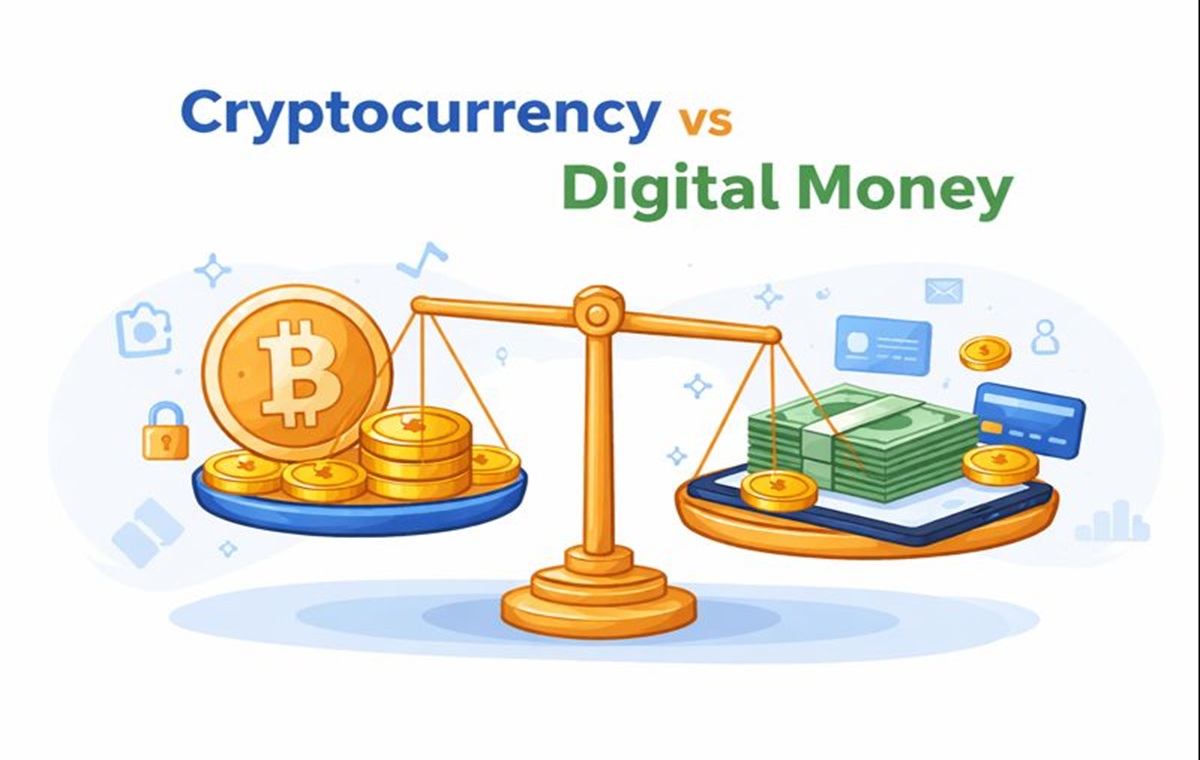
Money has changed a lot over the years. We moved from cash to cards and now to digital payments. Today, many people use online banking, mobile wallets, and digital payment apps. At the same time, cryptocurrency has become a popular topic in finance.
Because both use digital systems, many people think cryptocurrency and traditional digital money are the same. In reality, they are very different. They work in different ways and serve different purposes.
This article explains the difference between cryptocurrency and traditional digital money in simple language. If you are new to this topic, this guide will help you understand it clearly.
What Is Traditional Digital Money?
Traditional digital money is the money you already use every day. It is the same as paper money, but stored and moved electronically.
This includes:
- Bank account balances
- Debit and credit card payments
- Online banking transfers
- Mobile wallet payments
This money is issued and controlled by governments and banks. For example, US dollars, euros, or pounds stored in a bank account are digital money.
Even though you cannot touch it, it still represents real money backed by a country.
What Is Cryptocurrency?
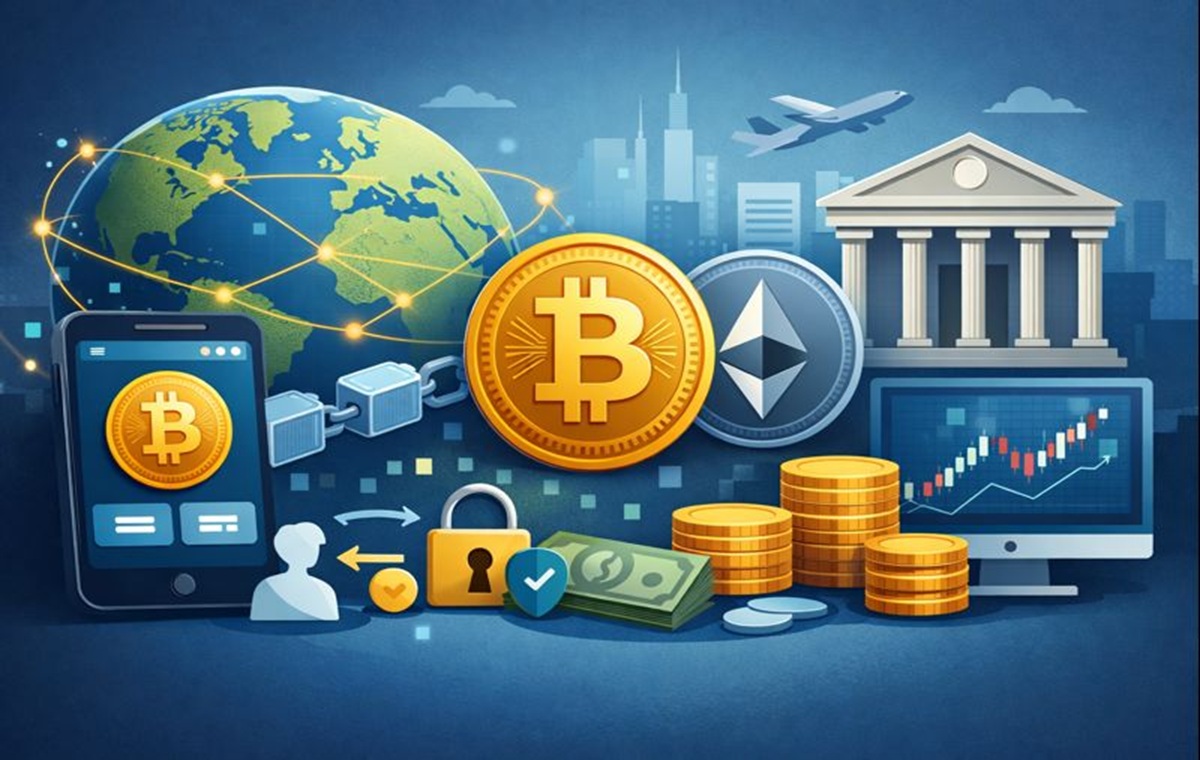
Cryptocurrency is a type of digital money that works independently of banks and governments. It exists only online and uses advanced technology for security.
Cryptocurrency runs on a system called blockchain. This system records all transactions in a public digital ledger. No single authority controls it.
Some well-known cryptocurrencies include Bitcoin and Ethereum. Each cryptocurrency has its own rules and network.
Cryptocurrency is often used for digital payments, investment, and technology development.
Main Difference Between Cryptocurrency and Digital Money
The biggest difference is control.
Traditional digital money is controlled by banks and governments.
Cryptocurrency is controlled by technology and network users.
Below, we explain the differences in detail.
Ownership and Control
Traditional Digital Money
Banks control digital money. Your money is stored in bank accounts. Banks can freeze accounts or reverse transactions if needed.
Governments also play a role. They decide how money is printed, regulated, and used.
Cryptocurrency
Cryptocurrency is decentralized. This means no single bank or government controls it.
You own your cryptocurrency directly through a digital wallet. Only the wallet holder can access the funds if the security keys are safe.
This gives users more control but also more responsibility.
How Transactions Work
Traditional Digital Money
When you send money using a bank or app, the transaction goes through a central system. Banks verify and approve the payment.
This process is usually fast but depends on working hours and bank rules.
Cryptocurrency
Cryptocurrency transactions are verified by a network of computers. These computers follow strict rules set by the blockchain.
Transactions work 24 hours a day and do not depend on banks.
Once completed, transactions cannot be changed or reversed.
Security and Safety
Traditional Digital Money
Banks use strong security systems. They protect accounts with passwords, verification codes, and fraud monitoring.
If fraud happens, banks often help recover funds.
Cryptocurrency
Cryptocurrency uses cryptographic security. Transactions are recorded permanently on the blockchain.
If someone loses access to their wallet or sends money to the wrong address, recovery is usually not possible.
Security depends heavily on how well users protect their private keys.
Privacy and Transparency
Traditional Digital Money
Banks keep transaction details private. Only the bank and authorities can see full records.
Users trust institutions to protect their data.
Cryptocurrency
Blockchain transactions are public. Anyone can see transaction data, but personal identities are not shown directly.
This creates transparency but less personal privacy if wallet addresses are linked to users.
Speed and Transaction Fees
Traditional Digital Money
Local transfers are usually fast and low cost. International transfers can be slow and expensive.
Fees depend on banks and payment providers.
Cryptocurrency
Crypto transactions can be fast, especially across borders. Fees depend on network demand.
Some cryptocurrencies offer very low transaction costs, while others can be more expensive during busy times.
Regulation and Legal Status
Traditional Digital Money
Digital money is fully regulated. Banks follow strict laws to protect consumers and prevent illegal activity.
Users benefit from legal protections and clear rules.
Cryptocurrency
Cryptocurrency regulations vary by country. Some governments allow it, others restrict it.
Rules are still developing. Users must stay informed about local laws.
Value Stability
Traditional Digital Money
Digital money is usually stable. Governments manage inflation and currency value.
Prices and salaries are set using these currencies.
Cryptocurrency
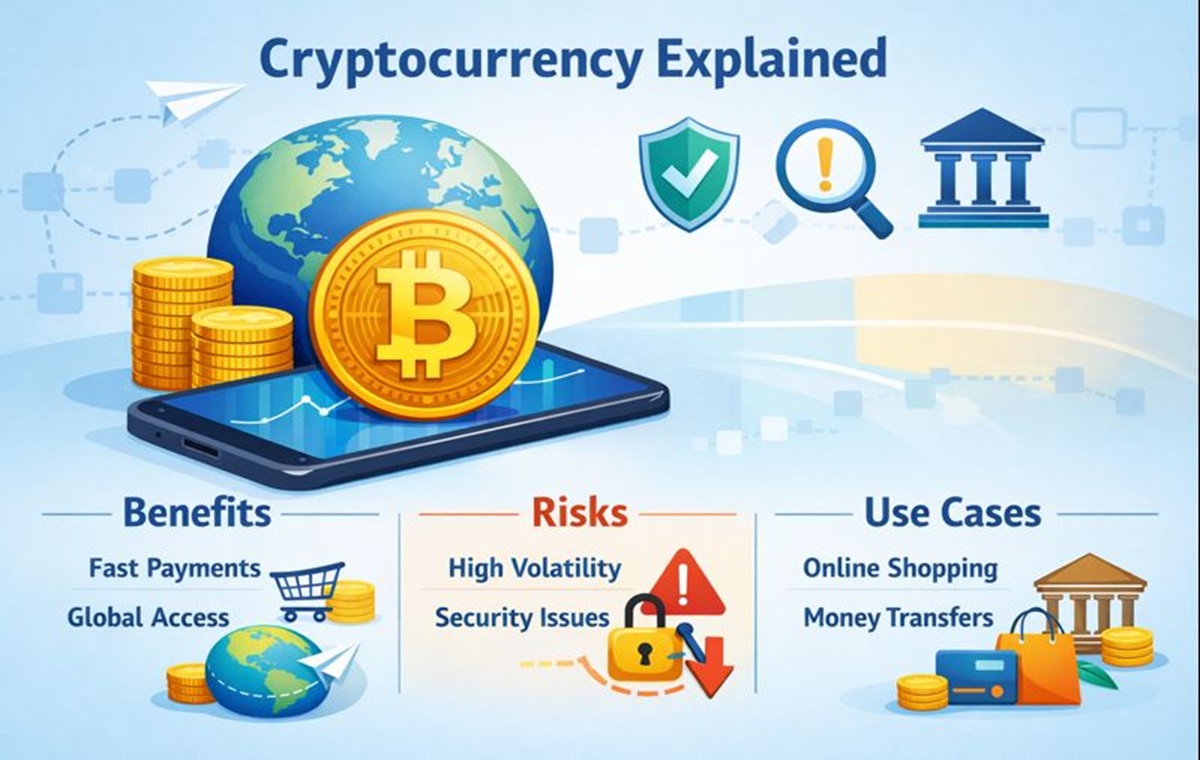
Cryptocurrency prices can change quickly. Values may rise or fall within short periods.
This makes cryptocurrency more risky for daily spending but attractive for long-term interest.
Use in Daily Life
Traditional Digital Money
Digital money is accepted everywhere. You can use it for shopping, bills, and services easily.
It is part of everyday life.
Cryptocurrency
Cryptocurrency acceptance is growing but still limited. Some businesses accept it, but not all.
Many people hold cryptocurrency rather than use it daily.
Technology Behind the Systems
Traditional Digital Money
Banks use private databases. These systems are controlled and managed by financial institutions.
Users trust banks to keep systems running.
Cryptocurrency
Cryptocurrency uses blockchain technology. This system is shared across many computers.
No single point of failure exists, which increases system reliability.
Risk and Responsibility
Traditional Digital Money
Banks take most responsibility for security. Users rely on customer support and legal protection.
Mistakes can often be fixed.
Cryptocurrency
Users are fully responsible for their funds. There is no central support system.
This gives freedom but requires careful handling.
Investment and Financial Growth
Traditional Digital Money
Digital money is mainly for spending and saving. Growth comes from savings accounts or investments like stocks.
Returns are usually steady but lower.
Cryptocurrency
Cryptocurrency is often used as a digital asset. Some people invest in it for long-term growth.
Prices can be unpredictable, so risk awareness is important.
Which One Is Better?
Neither system is better for everyone. Each serves different needs.
Traditional digital money is best for:
- Daily use
- Stability
- Legal protection
Cryptocurrency is suitable for:
- Technology innovation
- Global payments
- Long-term interest
Many people use both systems together.
Future of Digital Money and Cryptocurrency
Digital money will continue to grow with better banking technology. Faster payments and stronger security are expected.
Cryptocurrency will also evolve. Governments are exploring digital currencies inspired by blockchain ideas.
In the future, both systems may exist side by side.
Final Thoughts
Understanding the difference between cryptocurrency and traditional digital money helps you make smarter financial decisions.
Traditional digital money offers stability, regulation, and convenience. Cryptocurrency offers independence, innovation, and new opportunities.
Both have benefits and limitations. Learning how they work allows you to use them safely and wisely.
As finance continues to change, staying informed is the key to confidence and financial security.