Managing money is important for everyone.
People earn money, save money, spend money, and plan for the future.
But many people feel confused when they hear terms like wealth management and financial planning.
These two terms sound similar.
But they are not the same.
In this article, you will clearly understand:
- What wealth management is
- What financial planning is
- How they are different
- Which one is right for you
- When you may need both
What Is Financial Planning?
Financial planning is about organizing your money to meet your life goals.
It helps you answer simple questions like:
- How much should I save?
- How can I manage my monthly expenses?
- How do I plan for emergencies?
- How can I prepare for the future?
Financial planning focuses on basic money management.
Main Goals of Financial Planning
The main purpose of financial planning is to help you:
- Track your income and expenses
- Create a monthly or yearly budget
- Save money regularly
- Reduce unnecessary spending
- Prepare for future needs
It gives you clear direction for your money.
What Does Financial Planning Include?
Financial planning usually covers these areas:
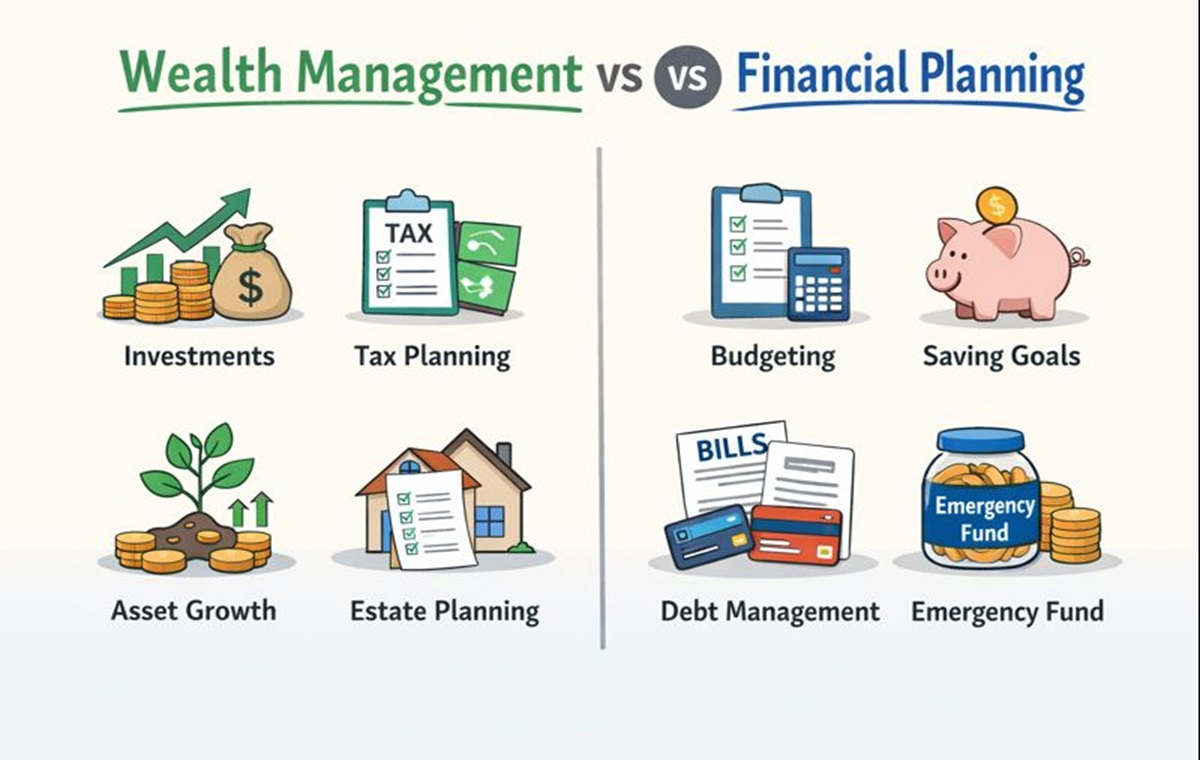
1. Budgeting
You learn how much money you earn and how much you spend.
This helps you control expenses.
2. Saving
You plan how much money to save every month.
This includes emergency savings.
3. Debt Management
You manage loans, credit cards, and monthly bills.
The goal is to avoid financial stress.
4. Goal Planning
You plan for goals like education, home purchase, or retirement.
Each goal has a timeline and savings plan.
Who Needs Financial Planning?
Financial planning is useful for:
- Students
- New job holders
- Families with limited income
- People starting their financial journey
- Anyone who wants better control of money
It is suitable for almost everyone.
What Is Wealth Management?
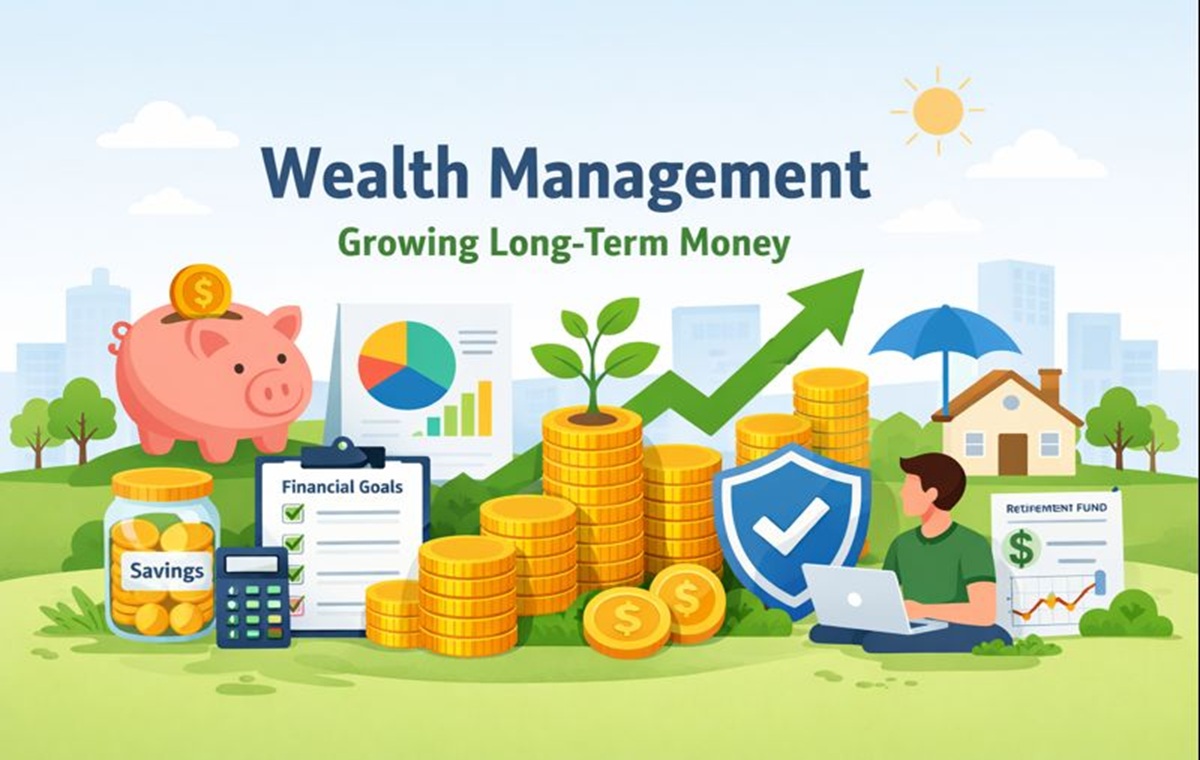
Wealth management is a broader and more advanced approach to money.
It focuses on growing, protecting, and managing wealth over the long term.
Wealth management usually combines many financial services into one plan.
Main Goals of Wealth Management
The main goal of wealth management is to:
- Grow wealth steadily
- Protect existing assets
- Manage large or complex finances
- Plan long-term financial security
It is not only about saving money.
It is also about making money work better for you.
What Does Wealth Management Include?
Wealth management may include:
1. Investment Planning
Managing investments like stocks, funds, or other assets.
The focus is long-term growth.
2. Risk Management
Reducing financial risks.
This includes insurance and protection planning.
3. Tax Planning
Managing money in a way that reduces tax impact legally.
4. Estate Planning
Planning how wealth will be passed to family members in the future.
5. Retirement Strategy
Creating long-term income plans for later life.
Who Needs Wealth Management?
Wealth management is more suitable for:
- High-income individuals
- Business owners
- People with multiple income sources
- Families with long-term assets
- People planning generational wealth
It is usually used when finances become more complex.
Key Differences Between Wealth Management and Financial Planning
Now let’s clearly understand how these two are different.
1. Scope of Services
Financial Planning
- Focuses on budgeting, saving, and basic planning
- Covers fewer financial areas
Wealth Management
- Covers investments, taxes, assets, and long-term strategies
- Has a wider and deeper scope
2. Target Audience
Financial Planning
- Designed for beginners
- Suitable for regular income earners
Wealth Management
- Designed for people with higher wealth
- Suitable for advanced financial needs
3. Time Horizon
Financial Planning
- Short-term to medium-term goals
- Focuses on current financial stability
Wealth Management
- Long-term and lifetime planning
- Focuses on future wealth growth
4. Level of Complexity
Financial Planning
- Simple and easy to understand
- Easy to manage on your own
Wealth Management
- More complex
- Often requires professional guidance
5. Focus Area
Financial Planning
- Managing money you earn
- Controlling spending and saving
Wealth Management
- Growing and protecting wealth
- Managing assets and investments
Can Financial Planning and Wealth Management Work Together?
Yes, they can work together very well.
In fact, financial planning is the foundation of wealth management.
You usually start with financial planning.
As your income and assets grow, you may move into wealth management.
Example to Understand Better
Imagine a simple journey:
- You start working
- You create a budget
- You save money
- You manage expenses
This is financial planning.
Later:
- Your savings grow
- You invest money
- You plan long-term security
- You protect your assets
This becomes wealth management.
Which One Is Right for You?
The right choice depends on your financial situation.
Choose Financial Planning If:
- You want better control of expenses
- You are starting your financial journey
- Your income is limited or fixed
- You want simple and clear money guidance
Choose Wealth Management If:
- You already have savings and assets
- You want long-term wealth growth
- Your finances are complex
- You want structured financial strategies
Common Myths About Wealth Management and Financial Planning
Let’s clear some common misunderstandings.
Myth 1: Wealth Management Is Only for the Rich
This is not completely true.
While it is more common among high-income people, anyone with growing assets can benefit.
Myth 2: Financial Planning Is Too Basic
Financial planning is very important.
Without it, wealth management cannot work properly.
Myth 3: You Must Choose Only One
You can use both at different stages of life.
They are not enemies.
They support each other.
Why Understanding the Difference Is Important
Knowing the difference helps you:
- Make better financial decisions
- Choose the right financial service
- Avoid confusion and stress
- Plan money according to your needs
It also helps you avoid using advanced services too early or ignoring basic planning.
Final Thoughts
Wealth management and financial planning both play important roles in money management.
Financial planning helps you control and organize your money.
Wealth management helps you grow and protect your wealth.
They are different, but connected.
Start with financial planning.
Move to wealth management when your finances grow.
Understanding this difference can help you build a more stable and secure financial future.